


Triphala : the 3 Fruit Alchemist

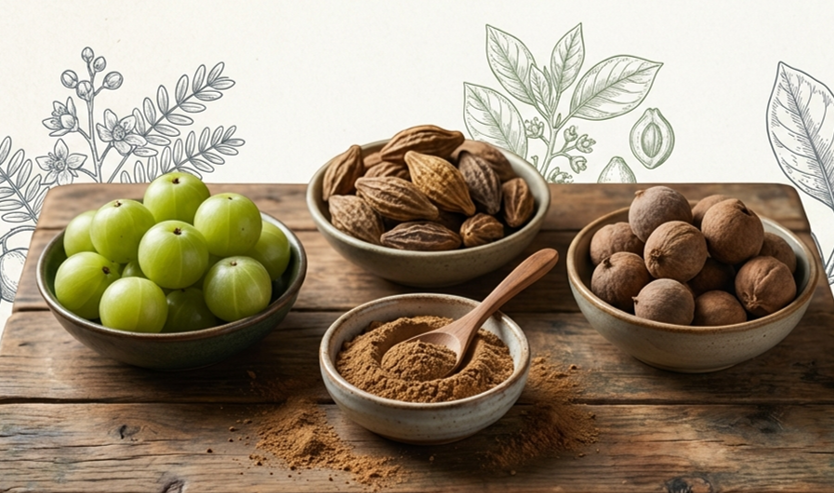
In the vast landscape of Ayurveda, few preparations carry as much weight- or as much love as Triphala. This blend is often referred to as a " Mahaaushadhi" or the Supreme Medicine in ancient Indian texts.
Triphala very simply means " three fruits ". It is a synergistic blend of Amalaki, Bibhitaki and Haritaki , combined to create a powerhouse of systemic rejuvenation.
Botanical Names: Emblica oficinalis (Amlakki)
Terminalia bellerica (Bibhitaki / Vibhitaki )
Terminalia Chebula (Haritaki)
Parts Used: Dried Fruits
Quality / Gunas : Balanced , a mix of light, heavy, dry
Taste /Rasa : Sweet , Sour, Bitter, Pungent, Astringent
Potency / Virya : Neutral or Slightly warming
Post-Digestive effect / Vipaka: Sweet
Dosha Compatibility : Tridoshic
The Plants: a sacred Trinity
There is a saying within Ayurveda on this ancient trinity of fruits,
"Even if a mother leaves a child, Triphala will never leave."
This beautiful sentiment reflects how Triphala cares for the body with a mother’s consistency and tenderness. While each plant has its own specific benefits, together they create more power and better benefits that neither can achieve on its own.
Amla - is the rejuvenating heart of the preparation, cooling , nourishing and deeply supportive of immunity and vitality.It is one of the richest sources of Vitamin C and is revered as a rasayana or longevity herb.
Bibhitaki - is the boldest of the three, scraping, cleansing, detoxifying. It has a particular affinity for the respiratory system and the eyes and it targets accumulated kapha with precision.
Haritaki- is described as the King of Medicine - "abhaya " , the fearless one.It targets the Vata dosha or the air element and is particularly associated with the colon and nervous system.
Together they support the five elements that lie within the body and all three doshas.
Triphala is one of the most popular preparations of Ayurveda. Its fame lies in its universal nature.
The true power of Triphala lies in its role as a Rasayana—a rejuvenative tonic that doesn't just clear out the old, but builds the new.
It supports regardless of age or constitution, supports the foundational health of the gut- which Ayurveda considers as the seat of all well-being
Here are only some of the many benefits of Triphala for
The Body
The Cleanse Essential / Gentle detoxification
If you have heard or know of Triphala, you are most likely to also know of it as a detox/ cleanse essential.
Most modern detoxes are aggressive and stripping. Triphala is the opposite. Triphala is a favorite during seasonal cleanses because it is tridoshic—meaning it works for every body type (Vata, Pitta, and Kapha) without causing depletion. It performs the action of Lekhana (scraping), gently removing Ama (metabolic waste) from the walls of the intestines and the deeper tissues.
Digestive Health
The "Gardener" Effect - Unlike harsh flushes, Triphala is a selective prebiotic. It feeds beneficial gut bacteria, ensuring your microbiome is stronger after the cleanse than it was before.
Non-Habit Forming- It tones the colon muscles rather than weakening them, making it a sustainable tool for digestive health without being dependent on it.
Immunity and Rejuvenation: With Amlakki , it supports ojas - the essence of immunity and vitality, making it a preparation that cleanses and rebuilds simultaneously.
Blood Sugar and Metabolic Balance
Modern research too points to Triphala's role in supporting healthy blood sugar levels and lipid metabolism. Its bitter and astringent tastes in particular make it useful in addressing Kapha related imbalances from an Ayurvedic perspective.
Eye health: Bibhitaki and Amlakki together have a strong classical association with the eyes. A cool Triphala decoction used as an eyewash is a time honoured practice for tired, strained or inflamed eyes - one that is as relevent today as it was then.
Beauty
Skin Clarity
Triphala is essentially "internal skincare." By purifying the blood and supporting liver function, it removes the root causes of dull skin and congestion. Rich in antioxidants and natural Vitamin C, it supports collagen and brightens the complexion from the inside out.
Hair Care
Used as a herbal rinse, Triphala powder in warm water is a traditional and all natural remedy for hair loss, premature greying and scalp health.It's astringent properties tone the scalp, while its antioxidant content nourishes the hair follicles.
Anti-ageing
All three fruits are rich in anti-oxidants with Amla having the highest antioxidant concentrations of any food. In Ayurveda this quality is directly linked to the preservation of ojas and the slowing of cellular aging.
Oral Care: Triphala has a long classical history as an ingredient in toothpowders , gargles and mouth rinses. It's antibacterial and astringent properties support gum health, reduce inflammation and help maintain a clean balanced oral environment.
The Mind
In Ayurveda, a "clogged" gut leads to a "foggy" mind. By clearing physical heaviness in the digestive tract, Triphala helps lift mental lethargy (Tamas). Most people find that after a few weeks of use, their morning feels more "Sattvic"—meaning the mind feels clear, light, and focused.
Here's why
Clarity and Calm
Haritaki in particular is a "medhya" herb - one that supports the three functions of the mind- dhi (learning and perception) , dhriti (retention) and smriti (recall) . When the three work in harmony, the mind stays clear and grounded.
Reducing Mental Ama
Just as Triphala clears away toxins from the gut, it also feeds the mind with that clarity. It helps reduce mental residues of unprocessed emotions, heaviness and worry that tend to cloud clear thinking
Supports prana-vata
The sub dosha that governs the mind, the inward breath and perception is prana- vata. Haritaki has a well documented affinity for this sub dosha, making Triphala a quiet, reliable support for the nervous system - keeping the mind alert and steady.
The Soul: A Heavenly Origin
Legend tells us that while Lord Indra (the King of Heaven) was drinking nectar, a few drops fell to Earth. From these celestial drops, the Haritaki tree (one of Triphala's three fruits) was born. Using Triphala is said to be a way of honoring your "physical temple," ensuring the vessel is clear for a peaceful spirit.
Best Ways to use Triphala
Triphala Powder as a decoction : The most traditional way to use it
For general health and healthy and regular elimination , try 1/2 to 1 teaspoon of Triphala powder in a cup of warm water at bedtime.
For rejuvenation and long term vitality, try it on an empty stomach early in the morning.
The "Agni" Kitchen Hack (Adding Triphala to Food)
The Ritual: While it is traditionally taken as a tea, you can add 1/4 tsp of Triphala to a *Kitchari or a warm bowl of Red Lentil Soup (Dal).
*Tip: Whisk it in just before serving. The warm, earthy flavors of the food balance the bitterness of the herbs without destroying the delicate nutrients.
Triphala Capsules: For those who are sensitive to tastes - (as Triphala is distinctly bitter and astringent) capsules offer similar benefits with some convenience.
External Rituals: Try This
The "Glow" Face Mask (For all skin types)
Ingredients:1 tsp Triphala powder, 1 tsp Raw Honey, and a splash of Rose Water.
The Ritual: Mix into a paste and apply to clean skin for 10-15 minutes.
The tannins tighten pores and gently exfoliate, while the honey hydrates.
The "Strength" Hair Mask (For scalp health)
Ingredients:2 tbsp Triphala powder mixed with warm Water or Coconut Oil.
The Ritual: Massage into the scalp. Triphala's Vitamin C stimulates follicles and maintains a healthy scalp environment. Leave for 30 minutes before washing.
Of all the Ayurvedic preparations Triphala is possibily one of the most deserving of its fame with its versatality. As with most things in life , time of use, quantity of use and consistency is key - Get in touch with us or a qualified Ayurvedic Practitioner if you need more information or help on using it right.
Explore a few of our products that contain Triphala
Triphala Powder : Pure powder for versatality in use
Triphala Capsules : For consistency and convenience
Oil Pulling Rinse : as a part of your every oral care routine
Revived Roots Hair Oil : a post partum oil or for heavy hair loss/fall
Healthy Hair Oil : a hair oil to help you with hair fall / dandruff
Cured Sesame Seed Oil : a tridoshic simple abhyanga oil
References
Classical and Fundamental Ayurvedic Treatises
• Charaka Samhita: Primary reference for Triphala Rasayana, the iron vessel rejuvenation protocol, and the management of Prameha (urinary/metabolic disorders).[1, 2, 3]
• Sushruta Samhita: Key source for Masi Kalpana (carbonized preparations), ocular therapeutics (Chakshushya), and wound healing protocols.
• Ashtanga Hridaya (Vagbhata): Detailed source for the preparation of Triphala Ghrita and the rules of Aushadha Sevana Kala (timing of drug administration).[4, 5, 6]
• Sharangadhara Samhita: Technical reference for the 1:2:4 pharmaceutical ratio and the default rules for herbal proportions.[7, 8, 9]
• Bhavaprakasha Nighantu: Authoritative text on the energetics (Rasa, Guna, Virya, Vipaka) and Tridoshic properties of the three fruits.
Frawley, David and Vasant Lad. The Yoga of Herbs. Lotus Press, Twin Lakes, Wisconsin;2001.
Pole, Sebastian. Ayurvedic Medicine: The Principles of Traditional Practice. Singing Dragon, London; 2013.
Contemporary Clinical Research and Reviews
• Peterson, C. T., et al. (2017). "Therapeutic Uses of Triphala in Ayurvedic Medicine." Journal of Alternative and Complementary Medicine. Focuses on gut microbiome modulation and systemic antioxidant defense. https://pmc.ncbi.nlm.nih.gov/articles/PMC5567597/
• Choudhary, N. (2016). "Pharmaceutical Review of Triphala Masi Preparation." International Journal of Ayurveda and Pharmaceutical Chemistry. Validates the antimicrobial efficacy of carbonized Triphala.[10]
• Jeurkar, S., et al. (2022). "Triphala Churna: A Comprehensive Review." Research Publish Journals. Analyzes botanical profiles and immune-modulating properties.
• Srinivasan, et al. (2019). "Pharmacognostical Evaluation of Triphala Masi." International Journal of Research in Ayurveda and Pharmacy. Details the pyrolysis process and temperature optimization.[11, 12]
• Singh, R. H. (2017). Reinterpretation of Aushadha Kala in terms of biological clocks and modern chronopharmacology.[5]
Practitioner and Pharmaceutical Guidelines
• Ayurvedic Formulary of India (AFI): Official guidelines for the standard 1:1:1 ratio of Haritaki, Bibhitaki, and Amalaki.[13, 14]
• Easy Ayurveda (Dr. J.V. Hebbar): Clinical analysis of Netra Tarpana therapy, the "Iron Vessel" longevity remedy, and adjuvant (Anupana) rules.[1, 4]
• Banyan Botanicals & Organic India: Resource guides for DIY topical applications, face masks, and internal dosage for modern practitioners.
1mg Ayurveda. Triphala — Uses, Benefits and Side Effects. https://www.1mg.com/ayurveda/triphala-12
National Institutes of Health, PubMed Central. Triphala research index. https://www.ncbi.nlm.nih.gov
Peer-Reviewed Papers
Baliga, M.S., Meera, S., Mathai, B., Rai, M.P., Pawar, V. and Palatty, P.L. “Scientific validation of the ethnomedicinal properties of the Ayurvedic drug Triphala: a review.” Chinese Journal of Integrative Medicine, 2012; 18(12): 946–954. DOI: 10.1007/s11655-012-1299-x. https://pubmed.ncbi.nlm.nih.gov/23239004/
Belapurkar, P., Goyal, P. and Tiwari-Barua, P. “Immunomodulatory effects of Triphala and its individual constituents: a review.” Journal of Pharmaceutical Sciences and Research, 2014; 6(6): 188–193. PMCID: PMC4293677. https://pmc.ncbi.nlm.nih.gov/articles/PMC4293677/
Gul, M. et al. “Functional and Nutraceutical Significance of Amla (Phyllanthus emblica L.): A Review.” Antioxidants (Basel), 2022; 11(5): 816. PMID: 35624683. https://pubmed.ncbi.nlm.nih.gov/35624683/
Comments